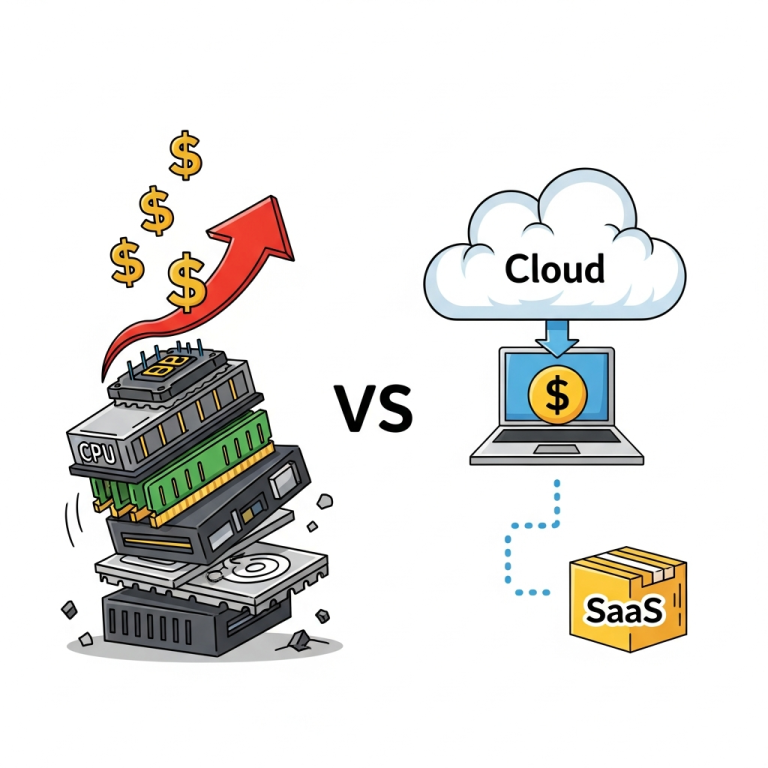
Rising Hardware Costs: Why Cloud & SaaS Matter Now
Hardware costs are rising and refresh planning is becoming less predictable across the UK. If recent quotes for laptops, desktops, servers or storage have come back higher than expected, you’re not alone. Pressure on key components like RAM (memory), alongside market demand linked to AI, is contributing to wider increases and supply fluctuations.
The bigger issue isn’t just the headline number — it’s what rising hardware costs do to budgets and delivery. When procurement becomes unpredictable, forecasts are harder to trust, projects get delayed, and teams spend more time managing exceptions than delivering improvement.
Why hardware costs matter for budgets and IT planning
Most organisations don’t struggle because they can’t buy hardware. They struggle because they can’t plan with confidence.
A modest increase in hardware costs can quickly lead to:
- Forecasts becoming less reliable as pricing changes between budgeting and purchase
- Project delivery slipping if kit isn’t available when it’s needed
- Ageing equipment staying in service longer, increasing support effort and risk
- Mixed device estates creating inconsistent user experience and more tickets
For schools and trusts, this can be amplified. Budgets are typically set annually, purchasing is planned early, and deployments often need to fit into tight holiday windows. When hardware costs rise mid-cycle or delivery slips, disruption lands at exactly the wrong time.
Why cloud and SaaS reduce reliance on hardware refresh cycles
Moving to cloud services and SaaS (Software as a Service) won’t remove the need for devices, but it can reduce the number of big on-prem infrastructure purchases that dictate your roadmap.
Cloud and SaaS help create an IT model where:
- Server refresh cycles don’t control what you can deliver this year
- Resilience isn’t dependent on one site, one server, or one storage array
- Security improvements aren’t delayed waiting for on-prem upgrades
- Costs are easier to forecast over 12–36 months
This isn’t “cloud for cloud’s sake”. It’s a practical response to rising hardware costs — especially for organisations trying to modernise while keeping disruption low.
What “move to the cloud” should mean in practice
A good cloud strategy doesn’t need to be a big bang migration. For many organisations, the quickest progress comes from a SaaS-first approach that reduces the on-prem footprint to what genuinely needs to stay.
Typical early wins include:
- Shifting suitable services to SaaS to reduce server load and maintenance overhead
- Improving resilience with cloud backup and disaster recovery patterns
- Modernising file services to reduce reliance on legacy file servers
- Standardising device management and security baselines
The goal is simple: reduce the number of services that force on-prem refresh decisions — and make you less exposed to rising hardware costs.
Subscribe to our newsletter and keep up to date...
Education: moving away from SIMS on-prem is part of the same shift
Many schools and multi-academy trusts are reassessing the amount of infrastructure they host and maintain, and MIS is a key part of that conversation. Running SIMS on-prem (or any on-prem MIS) brings familiar challenges: server refresh planning, patching, backups, availability, remote access, and reliance on specialist knowledge during holiday periods.
Drivers behind moving away from SIMS on-prem often include:
- Reducing dependency on on-site servers and storage
- Simplifying upgrades with less holiday-window pressure
- Improving continuity and remote access for staff
- Reducing risk from single points of failure
This is not only an MIS decision — it’s an infrastructure, security and capacity decision, tied directly back to budgets and hardware costs.
A sensible approach: plan the transition, don’t rush the migration
The most effective organisations treat this as a budget and roadmap exercise, not a single technical project. A practical approach is to confirm what must remain on-prem in the short term, identify what can move first to reduce risk quickly, and build a phased plan aligned to budgeting and procurement cycles.
That way, when hardware costs rise or lead times slip, you’re not forced into compromises — you already have a plan that reduces reliance on on-prem refresh cycles over time.
Cloud and SaaS support across the UK: how DMS can help
DMS supports organisations across the whole of the UK with cloud and SaaS planning and delivery — from readiness and security reviews, through to migration, rollout, and ongoing support.
If rising hardware costs and availability issues are starting to distort your 2026 refresh plan, a short review can quickly clarify what should move first, what can wait, and how to reduce reliance on on-prem infrastructure while improving resilience and cost predictability.